
What Is Jordan’s Position in Food Reserves?… Warnings Issued by ELZUBI

Dr. Fadel ELZUBI warned that escalating disruptions in global supply chains—spanning the Red Sea, Hormuz, and Bab al‑Mandeb—are driving unprecedented risks to food security. He noted that fertilizer shortages and rising energy costs could cut global agricultural output by 10–15%, pushing prices higher while reducing availability.
ELZUBI emphasized that Jordan maintains relatively strong reserves, particularly wheat stocks covering 4–6 months, but stressed that the absence of strategic fertilizer reserves makes the global crisis harder to confront. He urged diversification of supply sources, stronger storage capacity, and international cooperation to safeguard food security.
ELZUBI Calls for Urgent Overhaul of Jordan’s Food Security Architecture
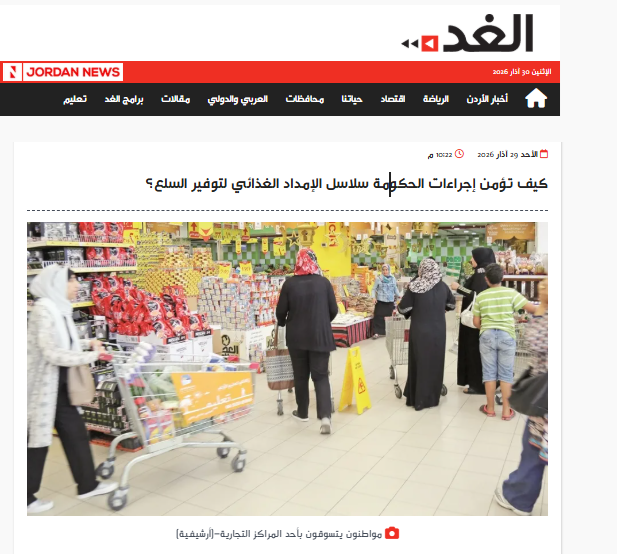
ELZUBI called for revising or eliminating taxes and customs duties on key agricultural and food inputs, while reassessing fiscal policy to ease macroeconomic pressures on prices. He emphasized that the close coordination of these institutions—industry and trade ensuring commodity flows, agriculture boosting domestic production, and social development protecting the vulnerable—can mitigate the crisis’s impact on citizens. Through integrated initiatives, Jordan can strengthen economic and social resilience against regional market fluctuations and safeguard the stability of the basic food basket.