
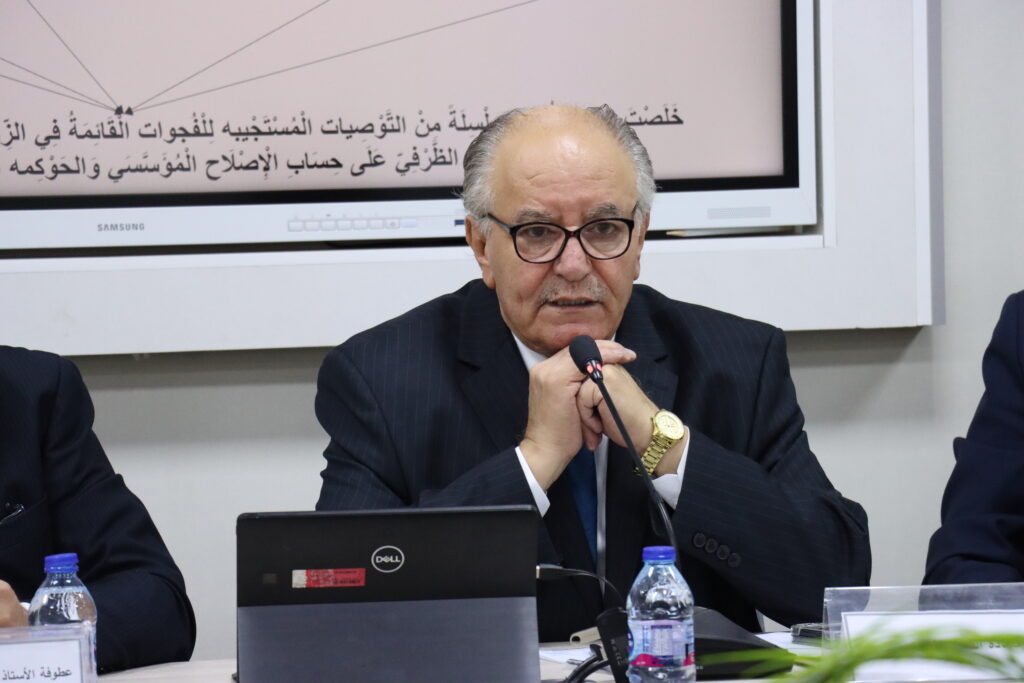
Food security expert Dr. Fadel El Zubi affirmed that modernizing Jordan’s agricultural infrastructure toward a more competitive and sustainable sector is both vital and fully aligned with the Economic Modernization Vision 2033, which serves as a strategic roadmap to transform agriculture into a key driver of economic growth and sustainable development.
Dr. El Zubi told Al-Rai that this vision underscores the need to upgrade the agricultural system through investments in infrastructure, modern technology, and digitization — all of which enhance productivity, reduce costs, and bring Jordan’s agricultural practices in line with global advancements.
He explained that Jordanian agriculture still lags behind in adopting digital and smart farming technologies, largely due to decades of reliance on traditional methods of irrigation, production, and marketing, with only sporadic modernization attempts between 1985 and 2010. The past decade, however, has seen dramatic global shifts with the Fourth Industrial Revolution, artificial intelligence, and precision agriculture tools, while Jordan continues to face a significant technological gap. This gap stems from the absence of clear policies, insufficient funding, and limited farmer training programs, which collectively restrict competitiveness and increase production costs compared with neighboring countries.
Within this context, Dr. El Zubi noted that the National Plan for Sustainable Agriculture 2022–2025, supported by the Economic Modernization Vision 2033, directly addresses these challenges through comprehensive programs focused on improving resource efficiency — especially water use, given Jordan’s acute scarcity driven by climate change. The plan also promotes smart irrigation systems and drought-resistant crops. Implementing this plan, he said, requires building an advanced national database for farmers and crops, strengthening information systems based on modern monitoring and analytical technologies, enabling real-time planning, reducing waste, and linking farmers to financing and marketing services.
Dr. El Zubi also highlighted the opportunities offered by controlled-environment agriculture (CEA) and climate-smart agriculture (CSA) — two approaches well-suited to Jordan’s environment and essential for sustainable sectoral growth. These technologies allow for precise control of environmental and production factors, improving crop quality while reducing water and energy consumption and limiting chemical pesticide use. They also enable product diversification, export growth, and job creation in rural areas, thereby strengthening food security.
Despite these opportunities, he warned that agricultural modernization still faces major structural challenges, including weak institutional coordination, limited capital investment, a shortage of skilled labor in modern technologies, slow progress in digital infrastructure — especially in rural areas — and the absence of supportive legislative and policy frameworks that would incentivize farmers and agribusinesses to adopt innovation and new technologies.
Dr. El Zubi emphasized that, with ongoing reforms and growing momentum, Jordan is well-positioned to achieve a qualitative leap in its agricultural sector in line with the aspirations of the Economic Modernization Vision 2033. As modernization advances, costs will decrease, product quality will improve, employment opportunities will expand, and national agricultural exports will grow — all contributing to a stronger share of agriculture in GDP, rural development, and overall economic resilience.
He concluded that modernizing Jordan’s agricultural infrastructure is not merely a response to local or international market pressures but rather a central engine for achieving sustainable economic growth within the framework of Vision 2033. With continued government support, active private-sector participation, and collaboration with international partners, Jordan can create an innovation-driven agricultural environment, positioning the country as a regional leader in green and technological economies by 2033.