
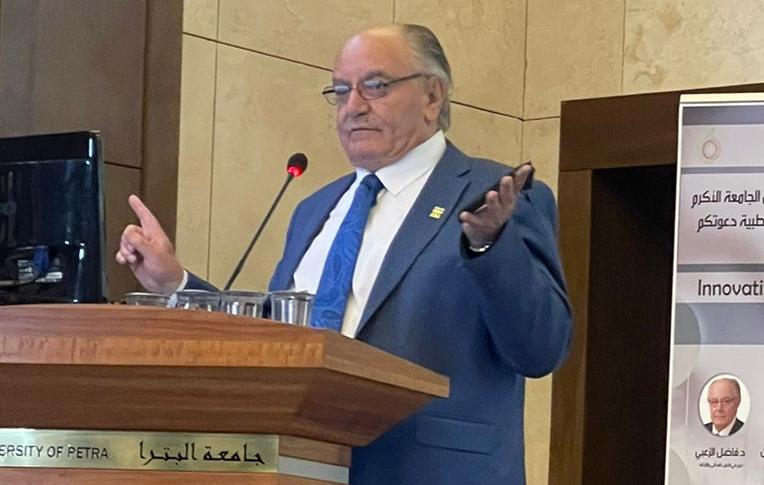
International food security expert Dr. Fadel ELZUBI explained that the government has launched a new initiative within the framework of the Economic Modernization Vision, under the slogan “Unleashing Potential to Build the Future.” The initiative consists of establishing companies and alliances based on the concept of the shared economy to organize agricultural labor and provide integrated agricultural services, under the supervision of the Ministry of Agriculture, during the period 2027–2029.
He added that this step is ambitious and necessary in light of global transformations affecting productive sectors, as the shared economy has become one of the modern tools to enhance efficiency, reduce costs, and improve employment opportunities and organization. Jordanian agriculture, which has long faced challenges related to water scarcity and high production costs, is indeed in need of innovative solutions that combine modern technology with more flexible work models.
ELZUBI noted that one of the strengths of this initiative is that it places agricultural labor at the heart of the development process, by organizing it and providing integrated services including training, technical support, and supply chain management. He emphasized that the Ministry of Agriculture’s supervision provides an institutional umbrella that ensures coordination with other national policies and increases the chances of success in the medium term.
He continued, highlighting the role of the private sector as a decisive success factor. Agricultural and commercial companies can provide practical expertise, financial investments, and advanced technological solutions that accelerate the implementation of the initiative. He pointed out that private sector participation is not limited to financing, but extends to developing modern irrigation systems, introducing smart agriculture technologies, and improving agricultural value chains—thus enhancing the competitiveness of Jordanian products in regional and international markets.
ELZUBI added that despite these positives, some observations cannot be overlooked. First, the concept of the shared economy in agriculture is relatively new in the Jordanian context, raising questions about the readiness of the legislative and regulatory framework to absorb this model and ensure it does not become merely formal alliances without real impact. Second, the implementation period set between 2027 and 2029 may appear relatively long, especially since the agricultural sector faces immediate challenges that require faster and more flexible solutions.
He further explained that the success of the initiative depends on the state’s ability to attract genuine investments in agricultural technology and provide advanced logistical infrastructure—elements not clearly mentioned in the project details. Moreover, involving small farmers and ensuring their benefit from these alliances represents a fundamental challenge, as this group is often the most vulnerable to marginalization in large-scale projects.
From another perspective, ELZUBI stressed that the initiative carries an important political and economic message, reflecting Jordan’s desire to keep pace with digital transformation and the professions of the future, while linking agriculture to a modern economic system that transcends traditional methods. This, in itself, enhances the Kingdom’s image as a state striving for modernization and sustainability, and grants it a prominent position in regional discussions on food security and sustainable development.
He concluded: “The Economic Modernization Vision for agriculture is a bold step worthy of appreciation, but it requires close follow-up, practical guarantees, and clear evaluation mechanisms so that it does not remain just a slogan. The real challenge lies in turning this vision into tangible reality that raises agricultural productivity, improves farmers’ incomes, and strengthens national food security—with active private sector engagement as the decisive factor between success and failure.”
Agricultural Employment Platform