
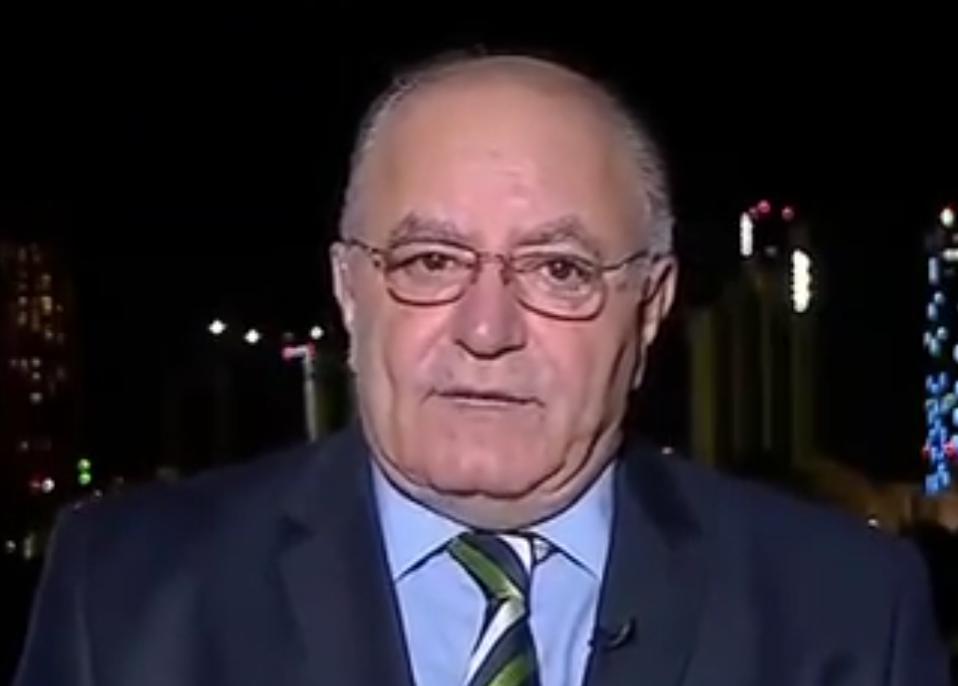
Food security expert Dr. Fadel ELZUBI stressed that the crisis of soaring red‑meat and sacrificial animal prices cannot be dismantled without a sharp structural critique of the current regulatory framework and instructions issued by the Ministry of Agriculture and related authorities.
ELZUBI explained that over time, these mechanisms have shifted from tools meant to protect the market and consumers into a fertile legislative environment that entrenches monopoly and price inflation.
He pointed out that the most glaring issue lies in the “policy of banning and rationing import licenses,” managed through rigid bureaucracy. The ministry grants live‑animal import permits to a very limited number of major traders and influential companies under the pretext of protecting local producers. This has created a form of “duopoly or oligopoly” in the imported meat market—such as Romanian, Australian, and Syrian livestock.
This systematic restriction, he said, has made it easy for this small group to control supply, pushing sacrificial animal prices during holiday seasons to record levels far beyond actual shipping and production costs, with no flexible price ceilings imposed by the Ministry of Industry and Trade ahead of peak demand.
ELZUBI also highlighted a critical regulatory and operational gap in current municipal instructions regarding licensing of sacrifice yards and pens. High fees and onerous conditions have discouraged small‑scale livestock breeders and genuine producers from participating directly, leaving the field to “intermediaries” and parasitic retailers who rent pens, buy animals cheaply from farms, and then resell them at inflated prices under the pretext of covering licensing costs.
He added: “Another flaw is the absence of mandatory live‑weight sales. Current rules allow arbitrary sales by sight and rough estimates, opening the door to black‑market speculation and consumer deception on Eid eve. Meanwhile, inspection teams limit themselves to routine health checks without legal authority to control prices or compel traders to present invoices and cost breakdowns.”
ELZUBI argued that reform requires a shift toward a policy of “participatory food sovereignty” that transcends the Ministry of Agriculture’s unilateral authority. This begins with the immediate abolition of the quota system in imports, opening the door to any national company that meets veterinary standards without quantitative restrictions. This would ensure a steady flow of chilled and live meat from alternative sources such as Sudan, Djibouti, Georgia, and Pakistan, breaking current monopolistic chains.
He continued: “This must be accompanied by a qualitative transformation in the role of the Civil and Military Consumer Corporations. Their internal systems should be amended so they move from mere retail outlets contracting with monopolistic importers to direct importers of live and slaughtered meat by weight from low‑cost origins, offering it to citizens at net operating cost. This would force the open market into a downward correction to compete with this strong government player.”
Operationally, ELZUBI emphasized that to control upcoming seasons and prevent sheep prices from exceeding 350 dinars per head, a coordinated executive alliance must be forged between the Greater Amman Municipality, local municipalities, and the Livestock Breeders’ Syndicate. This would establish free, parallel markets operating “from producer to consumer” directly, exempted from fees provided farmers sell directly to citizens.
He added: “This measure should be reinforced by strict legal enforcement from the Standards and Metrology Institution, banning sales by sight entirely, mandating electronic scales in all licensed pens, and setting price ceilings per live‑weight kilo—for example, no more than 5.25 dinars for local breeds and 4.25 for imported ones, based on current feed‑cost studies.”
ELZUBI stressed that moving these solutions from paper to practice, alongside accelerating the establishment of a national joint‑stock food security company with strategic live reserves in external fattening farms, is the key to ending seasonal price chaos and restoring red meat to Jordanian tables at fair and sustainable prices.
He concluded: “To curb post‑Eid price rigidity and break economic stagnation, oversight must shift from desk monitoring to direct commodity intervention. The Ministry of Industry and Trade, in coordination with municipalities, should oblige central government slaughterhouses to provide subsidized slaughter and distribution services to butchers committed to low profit margins, while simultaneously opening immediate imports of chilled meat by air and land to offset shortages. This prevents retailers from justifying price hikes with claims of limited local supply.
The executive mechanism should also activate a ‘smart consumer card’ at Civil and Military Corporation outlets, offering monthly subsidized shares of fresh red meat to low‑ and middle‑income families. This would withdraw significant purchasing power from the traditional market, forcing commercial butcheries to lower prices voluntarily to attract customers after losing their monopoly.
This effort, ELZUBI said, complements the accelerated establishment of a national joint‑stock food security company with strategic live reserves in external fattening farms, supplying production regularly through permanent parallel outlets. Such a system would serve as a safety valve against sudden price spikes.”