
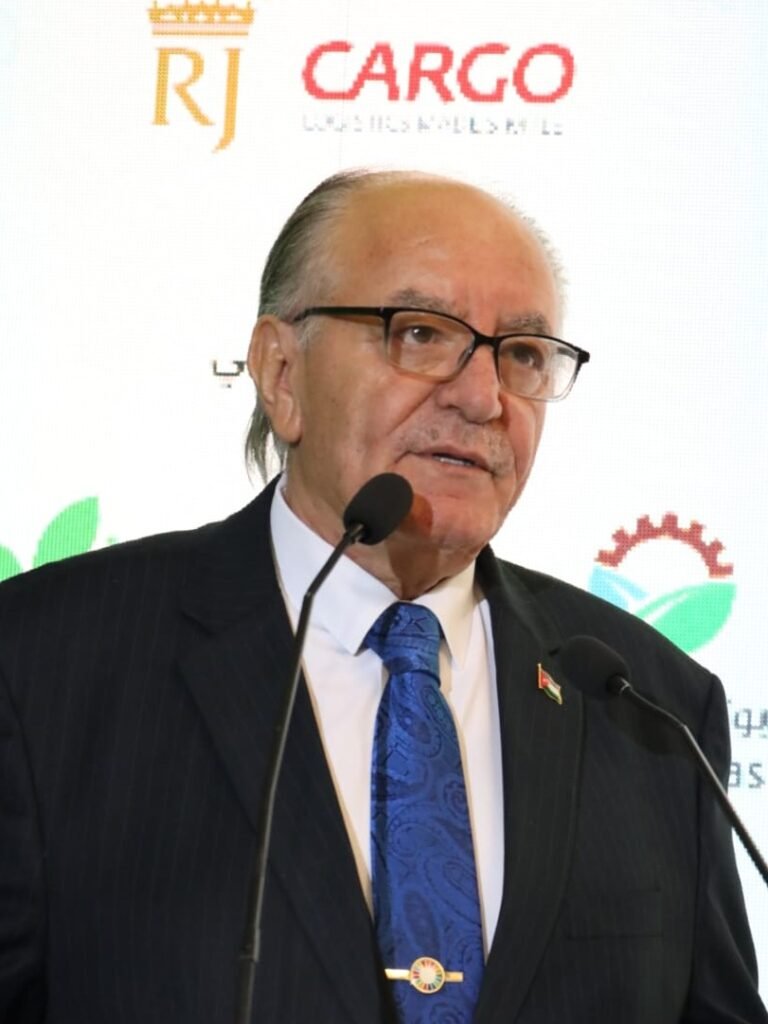
Dr. Fadel ELZUBI, Secretary‑General of the National Alliance to Combat Hunger, stated that this decision comes for the second time in a single season, with allocations for purchasing local wheat and barley from the 2025/2026 harvest raised to 59 million dinars instead of 45 million. The aim is to increase purchases from farmers from 110,000 tons to 147,000.
ELZUBI explained that in June the government had already doubled allocations to 45 million dinars, up from 19 million in the previous season, when only 40,000 tons were purchased. Adjusting the figure twice within a few months indicates that farmers offered more for sale than initially estimated. While the decision was framed as strengthening the strategic reserve, the deeper question is: where does its real impact lie? The answer: in rural farming communities before the grain reaches the silos. These millions are not just an accounting entry in the reserve file; they are cash flowing directly into communities living on the margins of the national economy, where jobs are scarce and migration to cities is a constant pressure. Rain‑fed grain farmers are the weakest link in the agricultural sector: they plant without irrigation, harvest without knowing their return, and face traders who know they lack storage and cannot afford to wait.
When the state commits to buying their crop at a declared price, it removes the two heaviest burdens they carry: price risk and marketing risk. These risks—not low productivity alone—are what drove many over the years to abandon grain farming or lease their land for grazing.
ELZUBI emphasized that the impact extends beyond the current season. A farmer assured of a market for his crop is better able to keep his land in production rather than leave it fallow or sell it under urban expansion. He is also better positioned to repay debts and prepare for the next season. The effect spreads to the small activities surrounding harvest—combines, transport, packaging, storage—keeping rural economies alive. Money spent during harvest quickly circulates in village shops, workshops, and services, reaching even those without land. Sustaining grain cultivation is not purely economic; it preserves the social fabric of these communities and their bond with the land.
Yet, ELZUBI cautioned, benefits do not automatically reach smallholders. Government purchases reward volume delivered; those who deliver more earn more. Larger holdings with machinery and transport capture the lion’s share, while smallholders unable to reach collection centers or wait for delayed payments may be forced to sell to intermediaries at lower prices. Thus, the design of collection mechanisms, proximity of centers, and speed of payment matter more than the size of allocations.
He noted that rain‑fed production remains hostage to rainfall. A good season that raised supply does not mean a new trend has begun; a single poor season can reverse the numbers regardless of allocations. The policy’s value lies not in this year’s outcome but in its ability to become a stable commitment guiding farmers’ decisions before sowing, not adjustments after harvest.
On food security, ELZUBI clarified that announced figures reflect government purchases, not total national output. Part of the crop goes to self‑consumption, seed, and the free market. The purchased quantities are what enter the strategic reserve. However striking the increase compared to last season, they remain a fraction of Jordan’s annual grain needs, in a country that imports most of its wheat and barley. The gap is structural, driven by scarce water, limited arable land, and rising demand.
To illustrate, ELZUBI likened the strategic reserve to a tank filled by two pipes: a main pipe of imports and a secondary pipe of local production. Expanding the secondary pipe is useful, but the tank’s fullness depends on the main pipe. Global market disruptions or shipping routes will remain decisive. Yet every local ton has value beyond its arithmetic share: it does not cross seas, is immune to global price swings and transport costs, and is shielded from export bans imposed by producing countries in crises. In turbulent times, that ton weighs more than its place in the tables.
Barley deserves separate mention: most of it goes to feed, and supporting its local production directly affects livestock costs and herders’ incomes. It is closer to supporting animal production and rural economies than to securing bread.