


ELZUBI to ALRAI: The Kingdom Holds a Strategic Grain Reserve Covering Ten Months
ELZUBI stressed that achieving sustainable food security requires integrated policies, including expanding investment in modern irrigation technologies, developing high-yield crop varieties, and supporting the livestock sector by controlling feed costs and increasing production capacity.
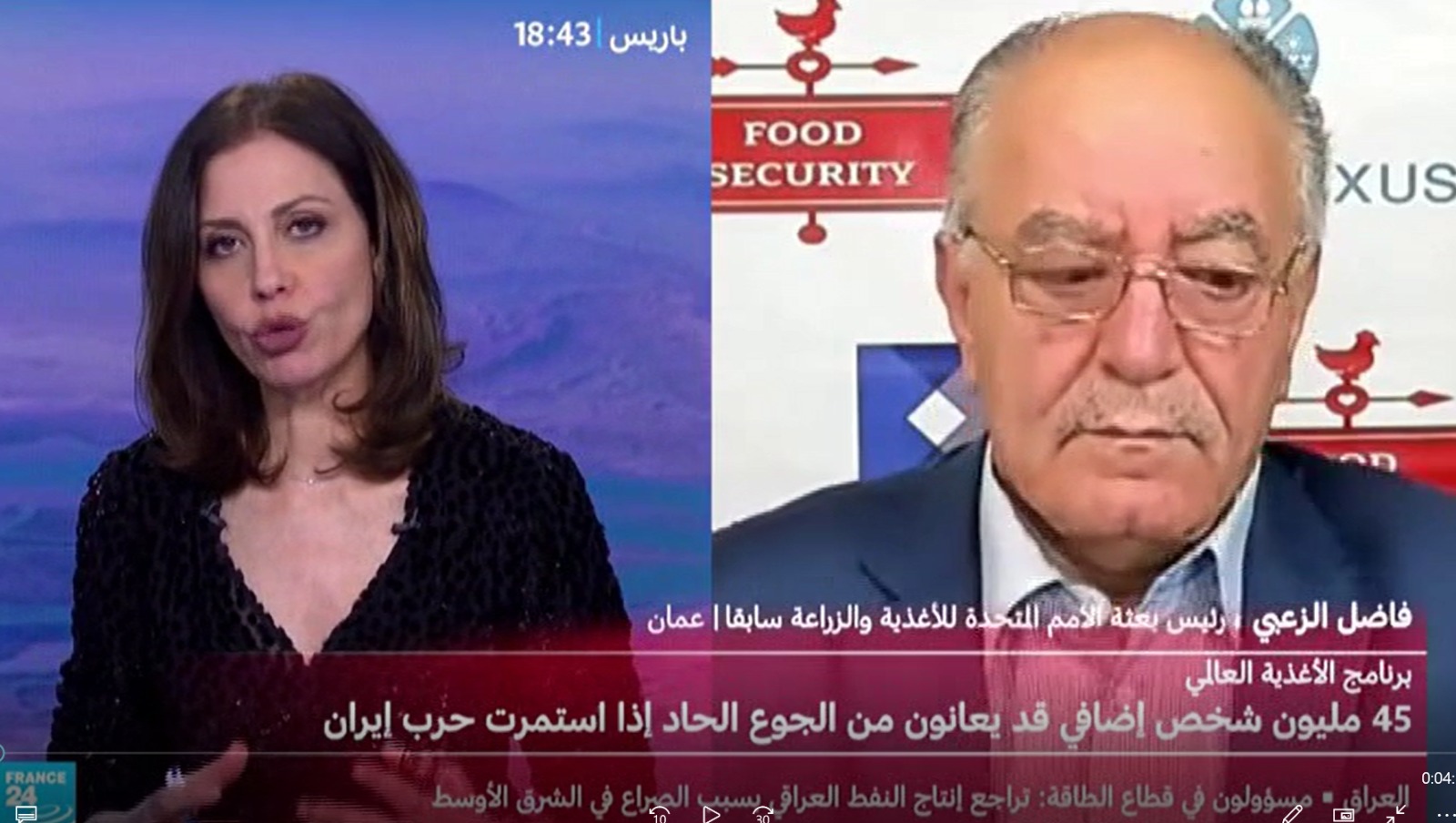
ELZUBI to France24: Connecting Crises to Global Food Security
From France 24 ELZUBI warns: The world’s food is at the mercy of conflict
War affects not only the battlefronts, but also supply chains, energy prices, and both global and regional food security.
Sri Lanka, still recovering from an agricultural collapse, faces a cutoff from its largest fertilizer suppliers. In Bangladesh, the “Boro” rice season—accounting for more than half of the country’s annual grain output—coincides with urea plant closures. In Egypt, one of the world’s largest wheat importers, the government struggles to maintain its bread subsidy program amid natural gas supply disruptions and mounting fiscal pressures.
In Brazil, a dual vulnerability emerges: the country sources one-fifth of its fertilizer from the Gulf and relies heavily on nitrogen. As an agricultural powerhouse, any reduction in yields would drive up global food prices. Across Latin America, cereal producers could see income declines of more than 7% by 2026, the steepest drop of any region.
South Asia needs fertilizer to survive the planting season, while Africa requires humanitarian aid and fiscal buffers to ease the burden. Meanwhile, Latin America must shield its farmers from soaring input costs to prevent global food price shocks. Advanced economies, for their part, should shift to alternative suppliers and routes to secure their needs.
ELZUBI to Al-Ghad: A worrying shortage of poultry feed… Where lies the solution?
Between temporary flexibility and long-term vision, international food security expert Dr. Fadel ELZUBI explained that short-term flexibility (allowing up to 10% breakage at the port of arrival for a period of three months) is necessary to avoid feed shortages and to mitigate the impact of regional conflicts on supplies.
ELZUBI cautioned: “But in the long run, a comprehensive framework is essential—one that diversifies import sources to reduce risks, adopts a graded quality system linking price to specifications and guiding usage, and develops strict monitoring mechanisms including regular testing for mycotoxins and nutritional elements.”
He added that this composite model balances rapid crisis response with ensuring sustainability, quality, and fairness in pricing. It also requires supporting farmers through government policies and institutional coordination among the Ministry of Agriculture, agricultural industry chambers, breeders’ associations, and import agencies

ELZUBI to Al Jazeera: Conflict casts a shadow over gas and fertilizer.
The war affects not only the battlefronts, but also supply chains, energy prices, and global and regional food security. Rising fuel and shipping costs are reshaping global food prices, especially in heavily importing countries, driving up transportation and food processing expenses. Energy and food are vitally interconnected; any surge in one exerts pressure on the fundamental costs of international food chains, exacerbating levels of food poverty.

ELZUBI to Radio Al-Balad: Jordan’s grain reserves are secure for 10 months, but prices remain the biggest challenge
ELZUBI to Radio Al-Balad: Jordan’s grain reserves are secure for 10 months, but prices remain the biggest challenge

Alghad Newspaper: Global Food Security at the Mercy of Maritime Routes
The key lesson from this compound crisis is that food security is no longer a local or regional issue—it is tied to the security of global maritime routes. The Strait of Hormuz is not just an oil or gas corridor; it is a vital artery supplying the fertilizers that produce food. Threats to this passage are direct threats to humanity’s ability to feed itself.