
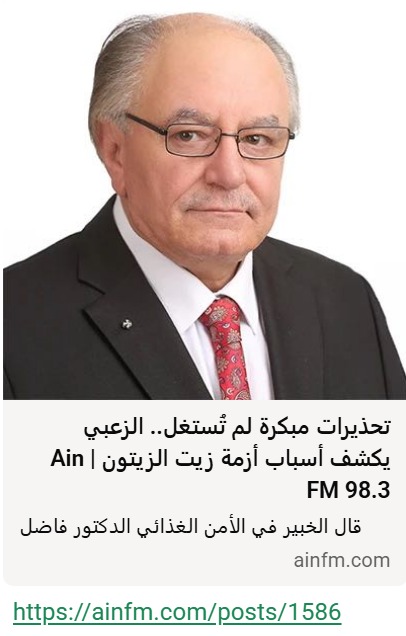
Elzubi explained in an interview on the Bi Sawtik program with Amer Al-Rajjoub on Ain FM that a pre-harvest assessment is conducted each year across various countries, allowing producers to estimate annual output before the picking season begins. He emphasized that it is entirely possible to know the volume of olive oil production before pressing begins, and consequently to determine the required import quantities and available alternatives based on clear, well-studied formulas.
He noted that olive press owners had called back in February for support for supplemental irrigation, given its direct impact on increasing olive oil production volumes. He also questioned why olives are not imported and pressed locally instead of waiting until the pressing season ends before granting import licenses, describing this approach as “a major mistake.”
Elzubi stressed that the priority must be protecting the citizen and their purchasing power, not merely protecting the local producer, arguing that the absence of a systematic approach to regulating agricultural production is the root cause of what is happening with the imported olive oil issue.
He further questioned why citizens are left to endure recurring crises — from the olive oil crisis, to the meat crisis, to the powdered milk crisis — when the public sector is supposed to act as a supporter and enabler of the private sector.
Dr. Fadel Elzubi, a food security expert, opened by noting that issues directly affecting citizens always spark widespread debate, questioning why Jordanians are caught off guard by every crisis as though it arrives without warning.
He concluded by pointing out that it is clear the private sector did not import olive oil simply because it did not find it a profitable activity given the current circumstances.