
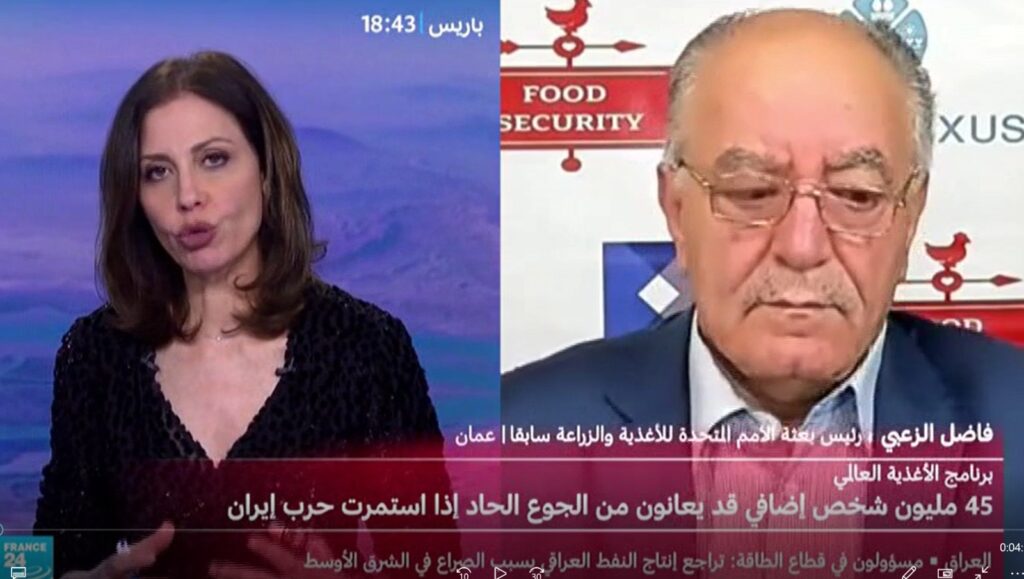
From France 24 ELZUBI warns: The world’s food is at the mercy of conflict
War affects not only the battlefronts, but also supply chains, energy prices, and both global and regional food security.
Sri Lanka, still recovering from an agricultural collapse, faces a cutoff from its largest fertilizer suppliers. In Bangladesh, the “Boro” rice season—accounting for more than half of the country’s annual grain output—coincides with urea plant closures. In Egypt, one of the world’s largest wheat importers, the government struggles to maintain its bread subsidy program amid natural gas supply disruptions and mounting fiscal pressures.
In Brazil, a dual vulnerability emerges: the country sources one-fifth of its fertilizer from the Gulf and relies heavily on nitrogen. As an agricultural powerhouse, any reduction in yields would drive up global food prices. Across Latin America, cereal producers could see income declines of more than 7% by 2026, the steepest drop of any region.
South Asia needs fertilizer to survive the planting season, while Africa requires humanitarian aid and fiscal buffers to ease the burden. Meanwhile, Latin America must shield its farmers from soaring input costs to prevent global food price shocks. Advanced economies, for their part, should shift to alternative suppliers and routes to secure their needs.