
Conference Participants: The Need to “Arabize” the Digital World and Knowledge Production
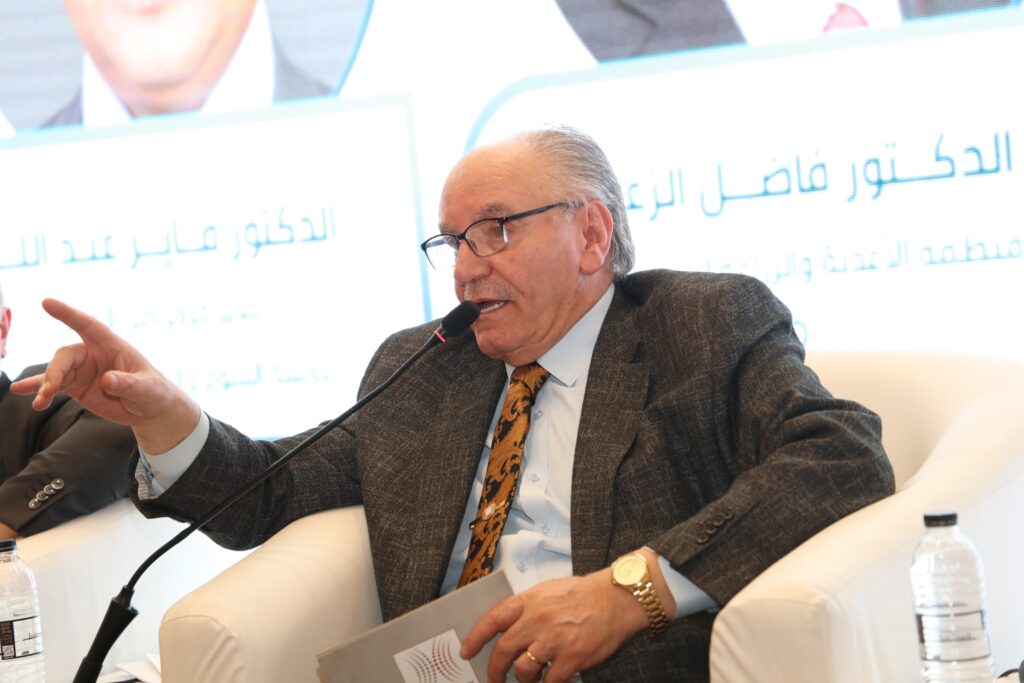
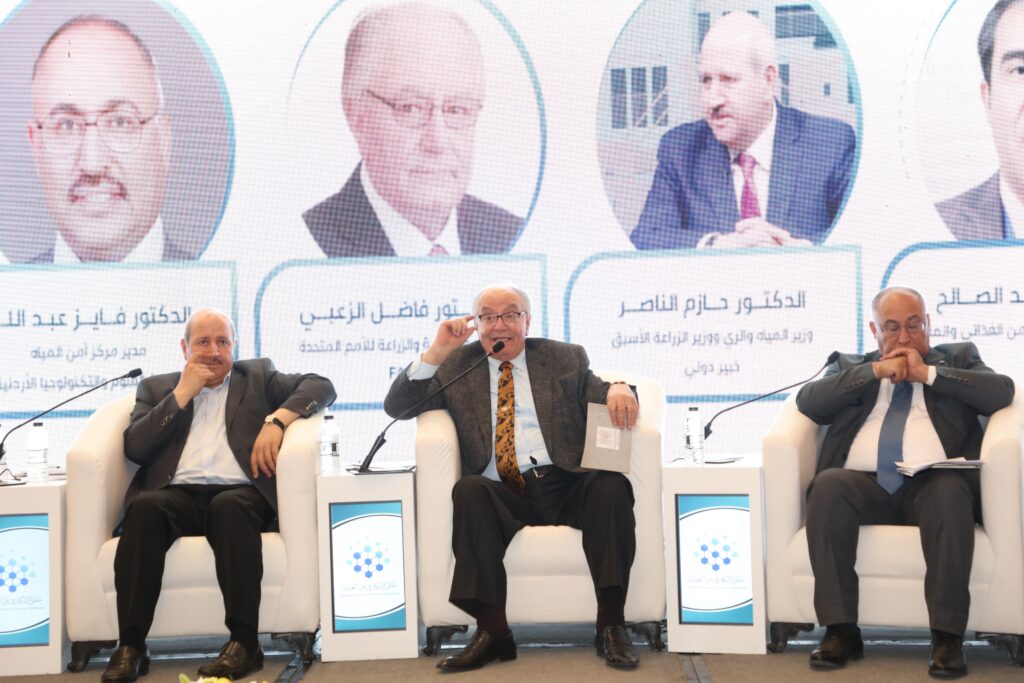
Dr. Fadel ELZUBI, food security expert and Director of the Geneva Center for Studies, stressed that the issue of water and food security in the Arab world is no longer a temporary crisis but has evolved into a framework that requires a rethinking of approaches. He explained that the region imports more than 55% of its food, while the Arab individual records the world’s highest levels of water deficit—indicators that reveal the depth of the challenge.
Speaking during a session titled “Arab Water and Food Security: From Managing Scarcity to Engineering Sustainability”, ELZUBI noted that dealing with scarcity for decades was limited to importation, subsidies, and storage—a model that has exhausted its capacity and can no longer absorb shocks.
He emphasized the need to shift from reactive management to proactive design, building food and water systems that generate resilience inherently, rather than adding it belatedly as an accessory.
ELZUBI pointed out that the Arab Food Security Strategy, endorsed at the Baghdad Summit in May 2025, provided the general framework, but the real test lies in mechanisms of implementation and follow-up at both national and regional levels.
He also addressed the role of international organizations, noting that conflicts in Sudan, Yemen, Gaza, Lebanon, and Syria have pushed these organizations to focus on emergency relief—a necessary but draining approach that depletes strategic work.
Drawing on his experience in Iraq during the ISIS crisis, he explained that organizations are most effective when they operate simultaneously on three levels: relief, restoring production, and rebuilding institutions—warning that omitting any layer weakens the other two.
ELZUBI urged UN partners to invest in the information infrastructure of Arab food security, through early warning systems, virtual water databases, and platforms to analyze supply chains before they collapse, not after. He cautioned that without such infrastructure, responses will remain slow and fragmented, regardless of resource increases.
He noted that Arab cooperation in food security has for decades been confined to declarations and closing statements, while today there is an opportunity to transform it into measurable operational mechanisms. He proposed three practical priorities:
- Establishing a joint Arab strategic reserve of grains and oils managed transparently.
- Creating a regional seed bank network to safeguard genetic diversity.
- Adopting a collective procurement mechanism for agricultural inputs to reduce import costs and strengthen bargaining power.
ELZUBI further stressed that technological innovation—from precision agriculture to artificial intelligence in irrigation management and safe use of non-traditional water—represents a powerful tool, but requires legislative frameworks, capable institutions, and long-term financing that does not seek quick returns.
He concluded by affirming that ideas and technologies are available, but the real scarcity lies in institutional will to translate knowledge into actual implementation.