
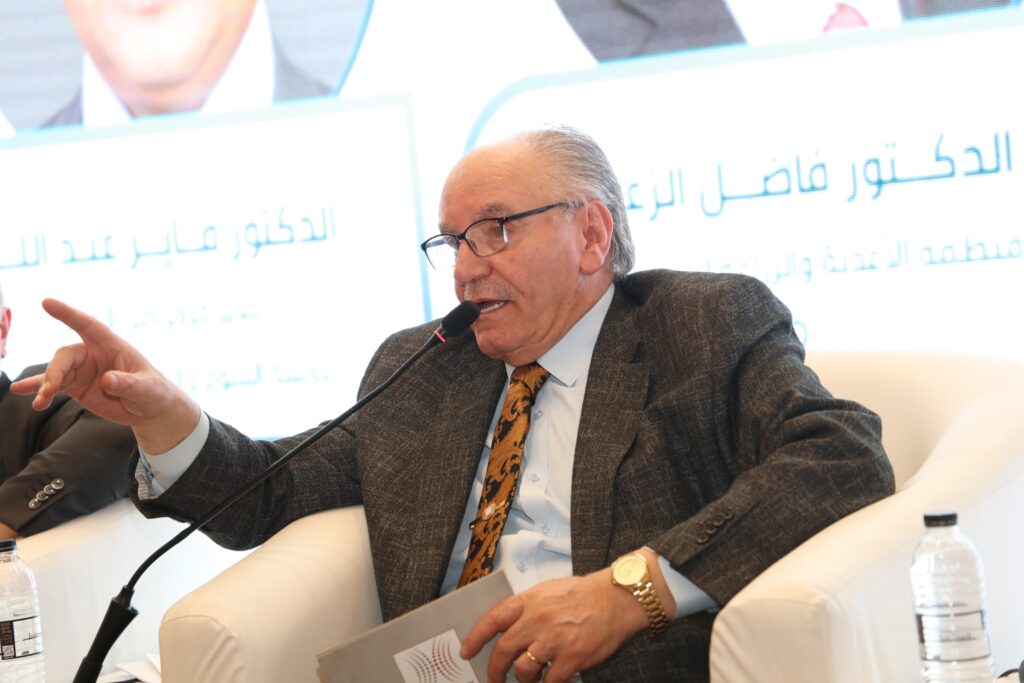
Dr. Fadel ELZUBI, former Ambassador of the Food and Agriculture Organization of the United Nations (FAO) and expert in food security and agricultural policy, stated that the recurring wheat fires this year across multiple agricultural sites in the Kingdom warrant serious attention. He raised questions as to whether these incidents represent limited seasonal losses or an early indicator of deeper fragility within the agricultural system.
Speaking to Al-Taj News on Monday, ELZUBI explained that assessing the impact of these fires requires distinguishing between national food security and the survival of farmers themselves. He noted that this year’s wheat fires do not pose a significant threat to the availability of bread for Jordanians, since the Kingdom’s annual wheat production ranges between 20,000 and 60,000 tons depending on rainfall, while national consumption is around one million tons per year.
He added that even in the best seasons, local production covers only a small fraction of national demand, with the bulk secured through imports and strategic reserves. Government data indicates that Jordan’s wheat stockpile is sufficient for nearly ten months of consumption, supported by diversified import sources and expanding storage capacity.
ELZUBI stressed that the burning of hundreds or even thousands of dunums does not materially affect the national supply balance. The cornerstone of wheat food security lies in the ability to import, store, and manage supply chains—not in local production volume alone.
By contrast, he emphasized that the farmer’s loss is entirely different: a burned field means the loss of a full year’s income at once, eroding confidence in the viability of continuing agriculture. The real danger, he warned, is the abandonment of farmland and its exit from the production cycle, leading to declining agricultural activity, weakening rural communities, and greater dependence on external sources.
On the causes of the fires, ELZUBI cautioned against drawing premature conclusions before official investigations are complete. However, he outlined likely scenarios: foremost among them climatic factors, including early heatwaves, rising temperatures, and dry vegetation around fields, which make crops and residues highly flammable.
He pointed out that neighboring countries have also witnessed widespread grain field fires this season due to record temperatures, underscoring climate as a regional driver. Human factors, often unintentional, are also common—sparks from harvesting machinery, unsafe burning of residues, negligence during picnics or smoking near dry fields, as well as electrical faults and transmission lines crossing farmland.
While deliberate action remains a possibility, ELZUBI cautioned against adopting this explanation as the primary cause without evidence, warning that such haste could distract from addressing more structural and widespread risks.
He identified the core problem as treating fires as emergencies to be reacted to after they occur, rather than as risks requiring proactive management. He called for a comprehensive national system for managing agricultural fire risks.
Such a system, he explained, should rely on early detection through hazard maps based on weather data and remote sensing, drones equipped with thermal cameras, and artificial intelligence capable of converting data into actionable early warnings. Jordan has already taken steps in this direction through satellite monitoring agreements, but ELZUBI urged expanding these tools to cover productive fields and linking them to operations rooms capable of rapid response.
He also recommended preventive measures such as creating buffer strips and plowed firebreaks around high-risk fields, ensuring nearby water points and basic firefighting equipment, and strengthening rapid-response teams—including training local community firefighting groups.
ELZUBI highlighted the importance of agricultural extension services in educating farmers on safe residue management and machinery maintenance, alongside raising community awareness to turn farmers and visitors into partners in monitoring and early reporting.
He further stressed the need for an efficient and swift agricultural insurance and compensation system to provide farmers with a safety net against catastrophic losses that might otherwise drive them to abandon their land. Experiences from Mediterranean countries, he noted, demonstrate the value of combining agricultural insurance with technological monitoring within an integrated risk management framework.
Finally, ELZUBI underscored that protecting wheat fields is not a narrow agricultural issue but one tied to food, economic, and national security. True food security, he argued, is not measured solely by the size of strategic reserves but by the state’s capacity to anticipate and manage risks. He warned that repeated fires without a comprehensive prevention and response system represent a signal that should not be ignored, even if current food stock levels remain reassuring