
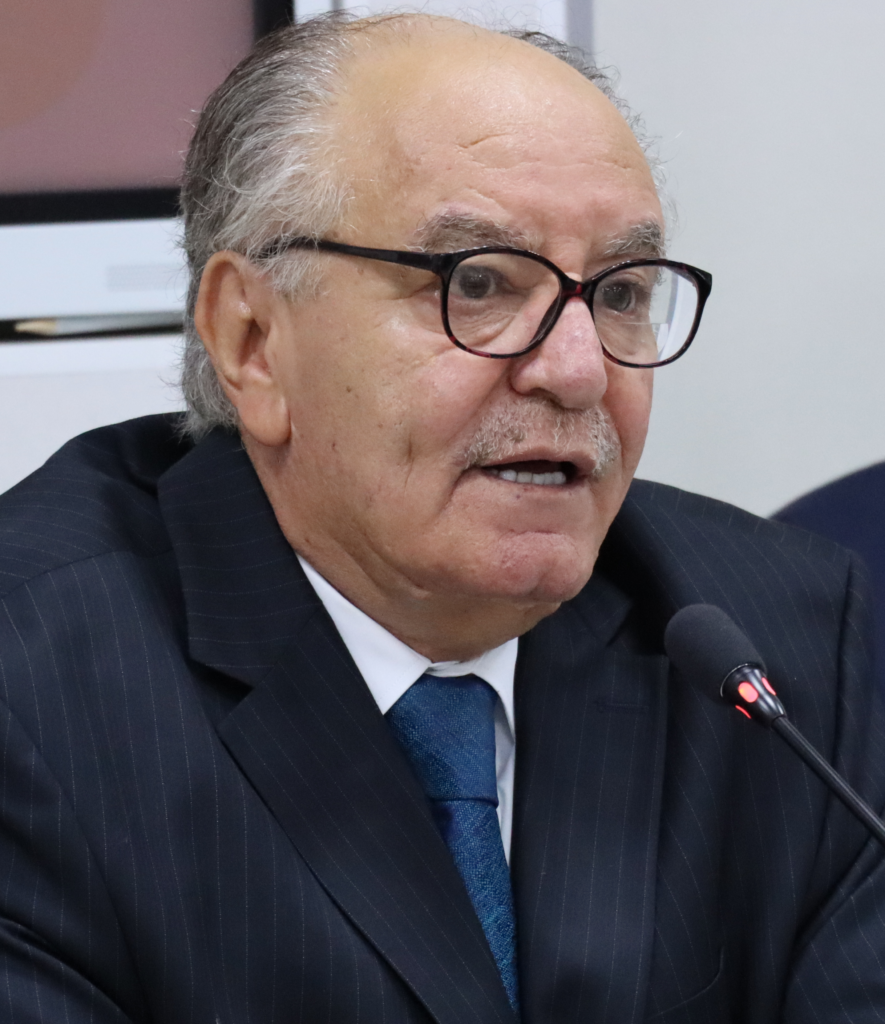
International food security expert Dr. Fadel ELZUBI told the Jordan News Agency (Petra) that the Kingdom demonstrated high readiness at the beginning of last March in dealing with the repercussions of the crises unfolding in the region. He attributed this to the accumulation of institutional experience in managing shocks, particularly following the COVID‑19 pandemic and the Russia‑Ukraine war, noting that this accumulation was clearly reflected in the stability of markets across the governorates during the current period.
He explained that the expansion of building silos and storage facilities in key governorates such as Amman, Irbid, and Aqaba has strengthened the Kingdom’s ability to absorb initial shocks and ensure the smooth supply of markets, especially in population centers and peripheral areas.
He pointed out that data from the Ministry of Industry, Trade, and Supply indicate the availability of a comfortable stock of strategic commodities: wheat covers local consumption for 9 to 10 months, while barley stocks are sufficient for about 8 months, which supports the stability of the livestock sector in the governorates.
He added that the sufficiency of basic foodstuffs such as rice, sugar, and oils ranges between 3 to 4 months, while meat stocks meet market needs for about 3 months.
He noted that the studied distribution of stock across governorates enhances the efficiency of logistical response and reduces bottlenecks in internal supply chains, particularly in governorates with high population density, while also supporting market stability in remote areas.
ELZUBI stressed that agricultural governorates represent the first line of defense for food security, foremost among them the Jordan Valley areas in the Jordan Rift, along with the agricultural highlands in the north and south. These regions achieve high levels of self‑sufficiency in vegetables and fruits, which has helped neutralize a significant part of global price fluctuations.
He highlighted that this role is complemented by the activity of food industries in governorates such as Zarqa and Irbid, which contribute to transforming agricultural surpluses into manufactured products with added value, thereby enhancing food stability and supporting supply chains.
Regarding the repercussions of regional tensions, he explained that disruptions in navigation in the Red Sea have increased shipping and insurance costs for goods arriving through Aqaba Port, exerting pressure on prices. However, government measures, including fixing customs ceilings and adopting previous freight rates as the basis for valuation, have helped limit the transfer of these costs to consumers across the governorates.
On the energy file, ELZUBI noted that the direct additional cost of regional events during last March amounted to about 150 million dinars, concentrated in securing alternatives for gas and fuel. This reflects the scale of the challenge that geopolitics imposes on the national economy.
He called for investing in the post‑de‑escalation phase to turn challenges into opportunities, through strengthening the concept of “food sovereignty,” expanding contract farming, adopting modern water‑saving technologies, and establishing geographically distributed logistical storage centers across the governorates, thereby enhancing the resilience of the national food system.