
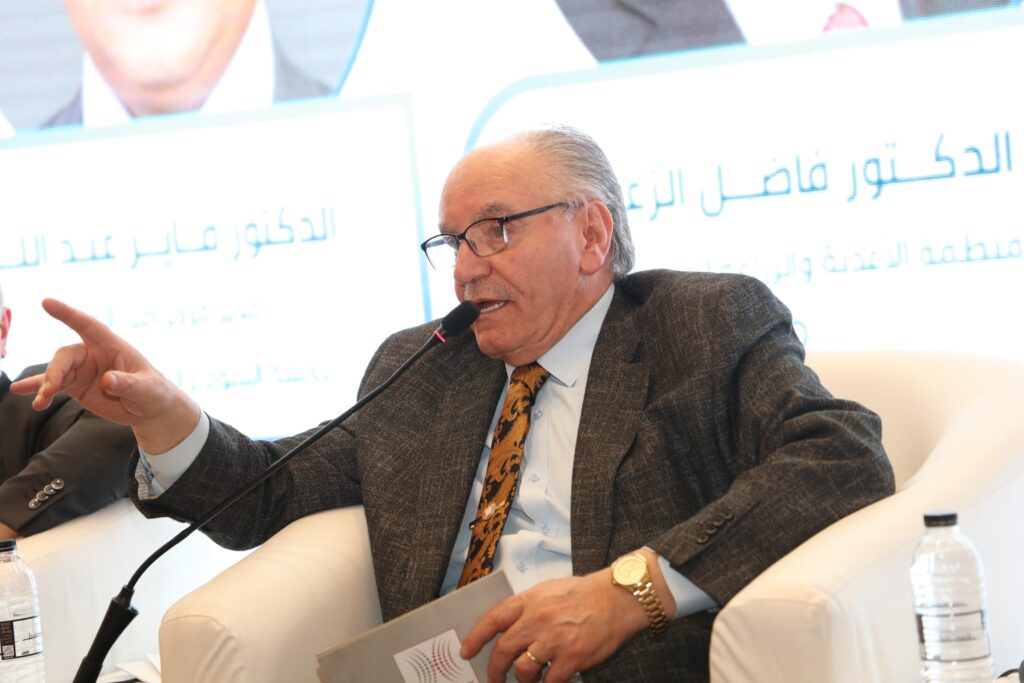
Food security expert Dr. Fadel ELZUBI stated: “Let us place the question in its numerical context: the share of renewable water available to each Jordanian is around 60 cubic meters per year—barely one-eighth of the threshold for absolute water poverty. Yet agriculture consumes more than half of the available resources without securing the national food basket, and a large portion of this share is fresh groundwater being depleted at nearly twice its natural recharge rate.”
He continued: “Defending this share was possible as long as the cities themselves were thirsty and had no alternatives. But after 2030, the equation will change: every cubic meter of fresh water consumed by a farm will be measured against the cost of a cubic meter of desalinated water that could replace it in household supply. At that point, pressure will mount to redistribute freshwater away from agriculture. The real question is not whether this will happen, but whether it will occur through negotiation or imposition.”
Dr. ELZUBI added: “The economic logic of trade-off is clear: increased urban supply means increased wastewater. The Khirbet Al-Samra plant currently treats about 130 million cubic meters annually, discharged into King Talal Dam to irrigate the Jordan Valley. After the National Carrier begins operation, these volumes may rise by more than 100 million cubic meters.”
He went on: “Farmers in the Jordan Valley have long proven that using blended treated water is viable agriculturally, provided quality is controlled and reliability ensured. In theory, agriculture could relinquish its freshwater share in exchange for a larger, dependable share of treated water. Everyone gains: cities drink, farmers irrigate, and aquifers breathe.”
Dr. ELZUBI cautioned, however: “This collides with two realities that cannot be ignored. The first is geographical: treated water flows by gravity to the Valley, while the most severe groundwater depletion occurs in highland farms in Azraq, Mafraq, and Dhuleil. Delivering Samra’s water there would require costly reverse pumping. Thus, the ‘trade-off’ narrative conceals the actual target—closing highland wells without real alternatives for their owners. This must be stated plainly and addressed with compensation tools, not denial.”
“The second is legal: farmers’ water rights are not property rights but administrative licenses subject to revocation. Jordanian legislation provides no mechanism for compensation when a water right is withdrawn, nor a pricing framework to bridge the gap between the high cost of desalinated water—driven mainly by energy prices—and the irrigation tariffs still calculated in piasters.”
He explained: “The absence of these frameworks means any redistribution will occur in a legal vacuum, leaving farmers unprotected and without fair value for what they relinquish.”
Dr. ELZUBI added: “Quality is another issue: the salinity and health constraints of treated water limit crop choices and may affect export acceptance in Gulf and European markets unless standards and monitoring are strictly enforced. The trade-off is therefore not a cubic meter for a cubic meter, but quality for quality—a difference that must be priced and regulated, not left to ad hoc bargaining.”
He concluded: *”The state must begin now—not in 2030—drafting a national compact for water redistribution built on five pillars:
- A published quantitative trade-off schedule for 2027–2035, specifying what freshwater agriculture will relinquish and what treated water it will receive in return.
- A legislative instrument defining agricultural water rights and ensuring fair compensation when withdrawn.
- A tariff scale reflecting scarcity costs and differentiating between water sources and qualities.
- Investment in transport and mixing networks to deliver treated water where it can actually be used.
- Linking crop licensing to water sources, so that export-oriented crops are no longer irrigated with fresh groundwater.”*
“This negotiation cannot be left to a single ministry. It requires a national umbrella bringing together the Ministries of Water and Agriculture with representatives of farmers in both the Valley and the Highlands, under high-level political authority to guarantee that what is agreed upon is implemented.”