
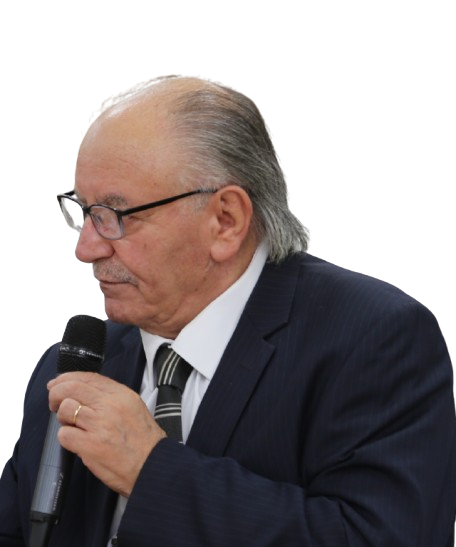
Food security expert Dr. Fadel ELZUBI explained that in Jordan, this equation acquires exceptional importance: water is a scarce resource, agriculture is one of its main users, while the processes of extracting, transporting, pumping, and treating water require energy. In turn, agriculture itself depends on energy for irrigation, cooling, storage, processing, and transportation. Consequently, any increase in the cost of one element in this system ultimately translates—directly or indirectly—into the cost of food.
He added that the key question we must ask is: do we truly manage these sectors as one integrated system, or are we still dealing with them through separate plans, institutions, and decisions? Responsibility for these files is widely distributed among different ministries and agencies: the Ministry of Water and Irrigation manages the water resource, the Ministry of Agriculture oversees agricultural production, and the Ministry of Energy and Mineral Resources handles energy. This administrative distribution is understandable, but does it come with sufficient institutional coordination capable of managing the interlinkages among these sectors? And when a decision is made in agriculture, water, or energy, is its impact on the other two sectors systematically accounted for?
He questioned whether the three ministries can view a cubic meter of water and a kilowatt of energy not merely as independent inputs, but as part of the cost of producing a kilogram of food. If the answer remains partial, then perhaps the time has come to develop a stronger coordination mechanism that integrates the costs of water, energy, and agricultural production into a single economic model.
Dr. ELZUBI emphasized that the issue is not about assigning blame to a particular ministry, but about reviewing the government’s overall approach. Do separate sectoral plans suffice to achieve shared food security goals? Do we need a clear national framework that links the decisions of the water, agriculture, and energy ministries, with common indicators to measure results? And ultimately, who is responsible for maximizing the amount of food and economic value derived from every cubic meter of water and every unit of energy?
He further noted that there are real opportunities to turn this interconnection into a tool for reducing food costs: using solar energy to pump irrigation water can lower energy expenses; modern irrigation systems can reduce water consumption; controlled expansion in protected agriculture and hydroponics, along with reuse of treated water, can enhance efficiency; and selecting crops based on their economic and water-use efficiency ensures that the goal is not merely to increase production, but to produce more food with fewer resources.