
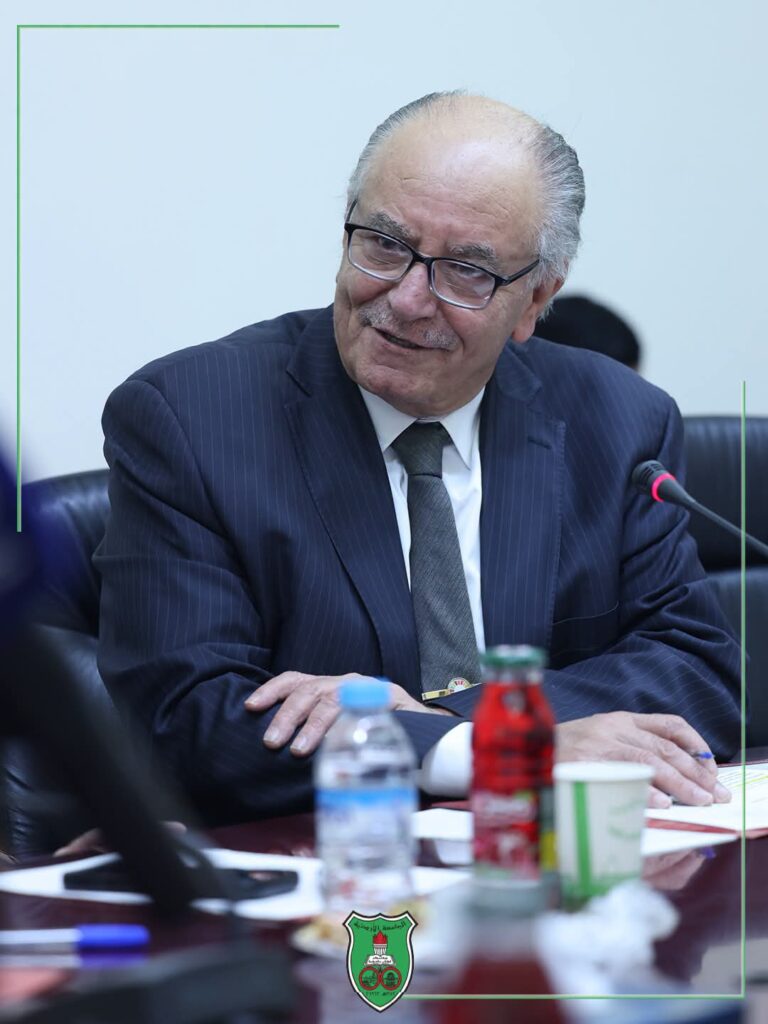
Food security expert Dr. Fadel ELZUBI said there is a common misconception between the concepts of food security and self-sufficiency, stressing that a country’s success in achieving food security should not be measured by its ability to produce locally everything it consumes.
He explained that food security means ensuring that every person, at all times, has access to sufficient, safe and nutritious food that meets their dietary needs, whether the food is produced domestically or imported. The fundamental criteria, he noted, are food availability, access to food, and the ability to utilize it effectively.
ELZUBI pointed out that countries such as Singapore import more than 90% of their food requirements, yet remain among the world’s most food-secure countries. This is largely due to their diversification of food sources, development of international partnerships, strategic food reserves, and economic stability.
He said this distinction is particularly important when assessing Jordan’s food security situation, given the country’s limited natural resources. Jordan’s per capita share of renewable water resources is among the lowest in the world, while the country also has limited arable land and relies heavily on rainfall for part of its agricultural production.
ELZUBI noted that the 2024–2025 rainy season was among the weakest in decades, following a series of below-average rainfall seasons, making agricultural production increasingly vulnerable to climate variability.
He said Jordan does not have the luxury of pursuing complete self-sufficiency in crops such as wheat, noting that domestic wheat production covers only around 3% of national consumption, while the Kingdom imports approximately 1.15 million tonnes annually. Jordan also imports barley, rice, sugar and vegetable oils—commodities that are difficult to produce domestically at an economically viable scale because of their high water requirements.
ELZUBI noted that Jordan’s overall food self-sufficiency ratio rose to 61.4% in 2024, while the Kingdom achieved full self-sufficiency in fresh milk and table eggs. He said this demonstrates that further progress can be achieved by directing resources toward commodities in which Jordan has a genuine comparative advantage.
He added that one of the most significant challenges lies in the close interrelationship between energy security and food security. Pumping groundwater, desalinating water, operating irrigation systems, and maintaining temperature-controlled supply chains all require energy. Consequently, increases in global oil and gas prices can have a direct impact on the cost of producing, transporting and distributing food.
ELZUBI also highlighted Jordan’s geographical location as an additional challenge, given the Kingdom’s reliance on regional corridors for the import of food and energy, many of which pass through areas experiencing recurrent instability. Any disruption to these corridors, he said, could threaten the continuity of supplies, rather than affecting prices alone.
He stressed the importance of strategic food reserves and diversification of import sources, noting that Jordan maintains a strategic wheat reserve covering approximately eight months of consumption. He described this as a reasonable level, while emphasizing the need for continuous improvement in the management, rotation and replenishment of strategic stocks.
ELZUBI argued that achieving genuine food security does not require Jordan to attempt to grow everything domestically. Rather, it requires managing the food gap intelligently through diversified import sources, investment in high-value and water-efficient agriculture—including protected agriculture and the reuse of treated wastewater—and stronger partnerships with the private sector in storage, transportation and logistics.
He also called for stronger institutional governance of food security, noting the establishment of the Higher Council for Food Security in June 2025, chaired by the Prime Minister. He stressed the need for the Council to evolve from a coordination framework into an effective decision-making body capable of setting clear priorities among the institutions responsible for food security.